Mastering drawing:7barsug8u0w= spider man, ?? – A Complete Guide to Creating Stunning Spider-Man Art
When it comes to superhero illustrations, Spider-Man has remained one of the most iconic and challenging figures to capture. The keyword drawing:7barsug8u0w= spider man might sound unusual, but it represents a unique, stylized approach to creating Spider-Man artwork that combines personal style with classic comic book energy. Whether you’re a beginner just picking up your pencil or an experienced artist looking to refine your craft, learning the process behind this type of drawing is both rewarding and creatively liberating.
In this comprehensive guide, we will cover the fundamentals of drawing Spider-Man, tips for perfecting anatomy and dynamic poses, techniques for adding depth and texture, and ways to make your version of Spider-Man truly stand out.
Understanding the Core of drawing:7barsug8u0w= spider man
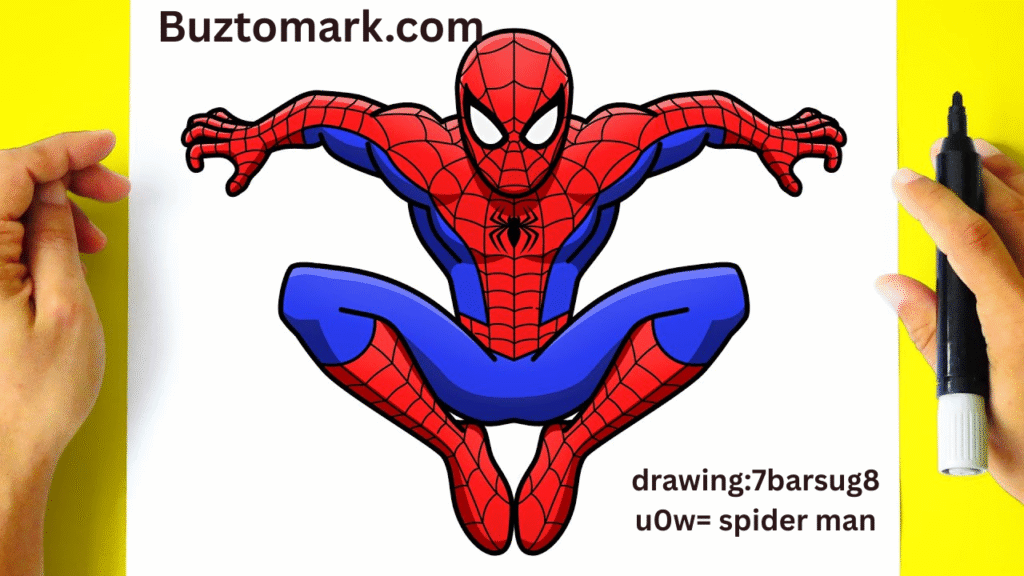
Before sketching your first line, it’s essential to understand the fundamentals of Spider-Man’s design. The character’s suit is not just a red-and-blue outfit — it’s a blend of dynamic geometry, fabric textures, and fluid body movement. The drawing:7barsug8u0w= spider man approach involves studying these details with precision and translating them into a distinctive visual style.
The main components to focus on include:
- Proportions: Spider-Man is typically lean yet muscular. His frame is athletic but not overly bulky.
- Pose and Motion: Spider-Man is known for his acrobatic stances. Whether swinging between buildings or crouched on a rooftop, his posture reflects agility and energy.
- Costume Details: The webbing pattern, the eye shapes, and the contrasting colors all require careful attention.
Gathering Inspiration and Reference Material
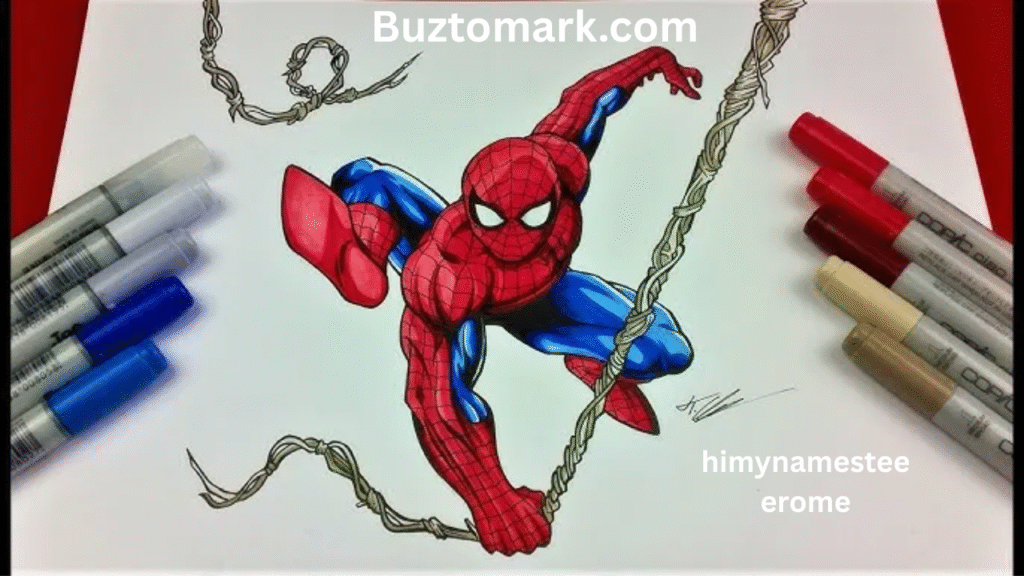
Even the most skilled artists use references. For drawing:7barsug8u0w= spider man, it’s wise to collect comic book panels, movie stills, and even action figure poses. This visual library will guide your understanding of how Spider-Man looks from various angles and in different lighting conditions.
When gathering references:
- Look at classic comic art from artists like Steve Ditko and John Romita Sr. for the traditional Spider-Man design.
- Study modern interpretations for fresh costume details and dynamic digital coloring.
- Capture real-world parkour and gymnastics movements to inspire realistic action poses.
By merging references with your unique interpretation, you can ensure your Spider-Man drawing has both authenticity and originality.
Sketching the Initial Form
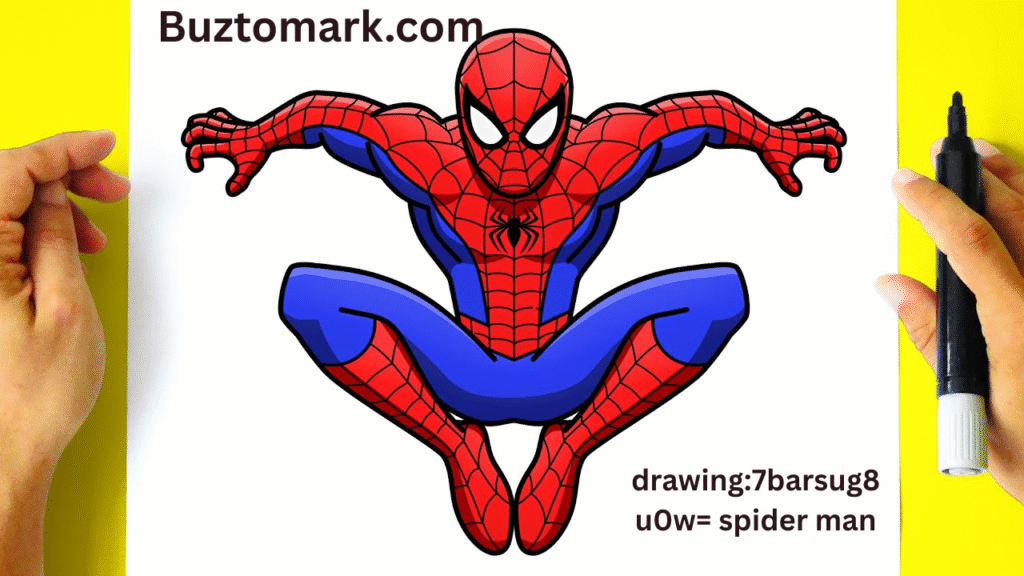
Every great drawing:7barsug8u0w= spider man starts with a solid foundation sketch. Begin with light pencil lines to map out the figure’s structure. Use simple shapes — circles for joints, lines for limbs, and an oval for the head — to create a proportional framework.
Tips for the initial sketch:
- Keep your lines loose and fluid; Spider-Man’s movements are rarely stiff.
- Mark the flow of motion with a single curved line through the figure’s center to guide the pose.
- Ensure the head is slightly smaller in proportion to the body compared to more muscular superheroes — this emphasizes agility.
Once the framework feels correct, you can refine it by adding muscle definition, costume boundaries, and the general placement of eyes and web patterns.
Perfecting Spider-Man’s Costume and Webbing Pattern
One of the most distinctive challenges in drawing:7barsug8u0w= spider man is the webbing design across his costume. It’s easy to misalign or warp the pattern, which can break the illusion of the suit’s fabric stretching across a moving body.
Steps for accurate web patterning:
- Draw the vertical web lines following the contours of the body, not just straight lines.
- Add the horizontal arcs between these lines, keeping them evenly spaced.
- Pay close attention to areas where the costume bends or folds — the pattern should warp accordingly.
The large, expressive eyes are another defining element. The eye shapes vary between interpretations, from sharp and narrow to large and rounded, so decide on your style early.
Adding Depth, Shadows, and Highlights
To make your drawing:7barsug8u0w= spider man come alive, shading is crucial. Spider-Man’s costume often has high contrast because of its bold color blocks. Shadows help separate the red and blue areas while also enhancing the three-dimensionality of the figure.
Shading techniques:
- Use cross-hatching for a comic-style texture.
- Blend with smooth gradients for a modern, digital look.
- Highlight raised muscle areas, such as shoulders, chest, and thighs, to show the suit clinging to his body.
Lighting direction should be consistent — decide where your light source is before adding shadows. This will unify the look of the entire drawing.
Bringing Motion to Life
Spider-Man is never just standing still. The magic of drawing:7barsug8u0w= spider man lies in portraying movement. Whether he’s mid-swing, flipping through the air, or crouched in a ready-to-spring pose, dynamic energy is essential.
To show motion:
- Extend limbs in exaggerated poses that follow the arc of action.
- Add flowing web lines that guide the viewer’s eye through the composition.
- Consider motion blur or speed lines for comic-style drama.
A still Spider-Man can look good, but an active Spider-Man looks legendary.
Personalizing Your Version
While reference and accuracy are important, your drawing:7barsug8u0w= spider man should reflect your unique style. Experiment with alternative costumes, unusual color palettes, or creative backgrounds.
Some ideas:
- A futuristic Spider-Man with neon patterns.
- A noir-inspired version with heavy shadows and muted tones.
- A humorous, cartoonish take with exaggerated proportions.
The goal is to create a piece that is both recognizably Spider-Man and distinctly yours.
Final Touches and Presentation
Once your drawing feels complete, review it for small improvements. Check for symmetry in the mask, consistency in web patterns, and clean linework.
For presentation:
- Ink your drawing for a crisp comic-book finish.
- Add a dramatic background, such as a city skyline or a stormy sky, to enhance storytelling.
- Sign your work — every great piece deserves recognition.
The drawing:7barsug8u0w= spider man approach thrives on attention to detail, so the final touches can make a significant difference in overall impact.
Conclusion
Mastering drawing:7barsug8u0w= spider man, ?? is about balancing precision with creativity. By studying anatomy, perfecting costume details, applying dynamic shading, and infusing personal style, you can create Spider-Man art that captures both the character’s iconic look and your own artistic voice.
The key is patience and practice. Every attempt will refine your skill, and over time, your Spider-Man drawings will evolve into powerful, eye-catching works of art that embody the energy, heroism, and charm of one of the world’s most beloved superheroes.