british airways emergency flight ba286, unexpected emergency, what happened?

Air travel today is often described as one of the safest forms of transportation, supported by rigorous systems, modern aircraft, and highly trained crews. Yet, every so often, a specific flight draws worldwide attention because of an unexpected event that interrupts the routine flow of long-haul operations. Such was the case with british airways emergency flight ba286, a service normally connecting San Francisco to London Heathrow. On this occasion, what began as a routine transatlantic journey transformed into a serious situation that required quick decision-making, professional response, and a reminder of the unpredictability of air travel. Understanding what happened on board and how it was resolved highlights both the challenges and the strengths of commercial aviation in dealing with emergencies.
The Route and the Aircraft

Flight BA286 is one of British Airways’ most recognizable long-haul services. Operating daily, it departs San Francisco International Airport on the West Coast of the United States and heads east across North America, the Atlantic Ocean, and into the United Kingdom, landing at London Heathrow. The aircraft used for this route is typically the Airbus A380, the world’s largest passenger plane, capable of carrying over 450 passengers across two full decks. For many travelers, this aircraft is the height of luxury and comfort in long-haul travel, offering a sense of space, quiet, and reliability. On this particular day, passengers boarded with the usual expectations of a smooth flight across time zones and continents.
The Airbus A380, however, is more than just a symbol of comfort. It is also a technological marvel built with redundancy in systems, safety procedures, and the ability to manage complex scenarios. The sheer size of the aircraft means that any disruption becomes a significant logistical effort, both in the air and on the ground. This makes what happened aboard british airways emergency flight ba286 all the more striking.
The Sudden Emergency
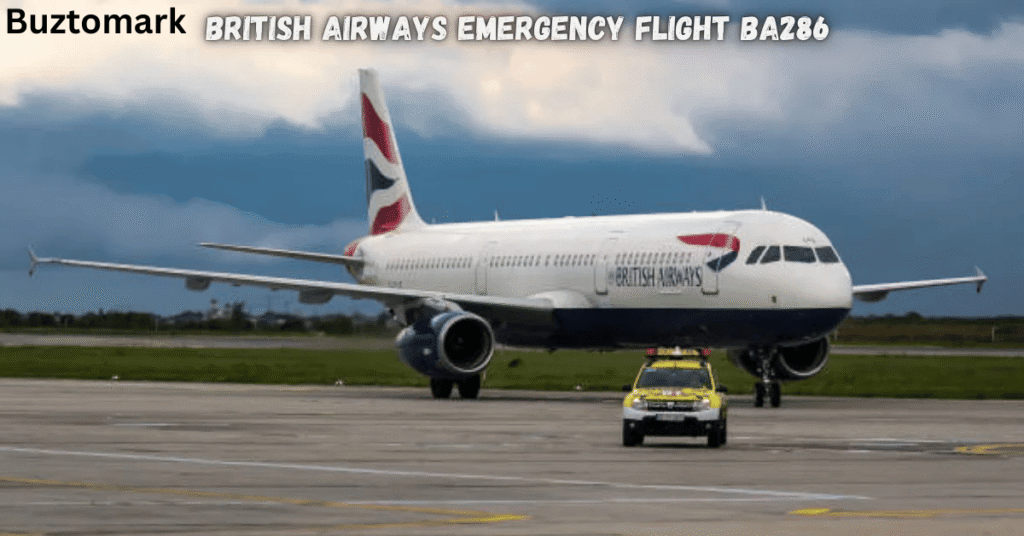
Midway into the flight, while cruising over Scotland at approximately 41,000 feet, the unexpected unfolded. A passenger suffered a severe medical issue that required immediate intervention. Airlines prepare for such incidents with onboard medical kits, trained crew, and sometimes even the chance presence of a doctor among the passengers. However, not every situation can be managed entirely on board. When a passenger’s life is at stake, the captain must make a decision: continue to the destination as planned or declare an emergency and secure priority landing to ensure the passenger receives medical care on the ground.
In this case, the crew chose the latter. The captain declared a general emergency, known as “squawking 7700” on the aircraft’s transponder. This code is internationally recognized as the signal for any emergency requiring immediate attention. Once activated, air traffic controllers in the region are alerted instantly, and all other nearby aircraft are instructed to give way. In a matter of seconds, a routine transatlantic journey became an operation centered on urgency, safety, and survival.
The Crew’s Response

British Airways crews undergo rigorous training to handle both technical and medical emergencies. Once the squawk 7700 was transmitted, procedures were set in motion. The flight deck communicated directly with controllers in London, requesting priority handling into Heathrow. In the cabin, the flight attendants coordinated with passengers, tended to the unwell individual, and reassured those nearby. Medical kits and equipment, including oxygen and defibrillators, are part of the standard inventory on long-haul aircraft, and the crew utilized what was needed while preparing the cabin for descent.
The professionalism of the crew is often taken for granted in day-to-day flying, but in moments like these, their skill becomes the defining factor in a positive outcome. Passengers later described how calm and collected the crew remained, balancing compassion for the ill passenger with authority in handling the wider situation. For the rest of those on board, it was a moment to recognize just how trained these professionals are for circumstances that most travelers never expect to face.
The Priority Landing
The Airbus A380 descended steadily toward London Heathrow, one of the busiest airports in the world. Normally, approaching Heathrow involves long holding patterns and careful sequencing with dozens of other inbound flights. In the case of british airways emergency flight ba286, however, all other considerations were secondary. Controllers cleared a direct route for the aircraft, ensuring it could land without delay. The chosen runway was 27L, one of Heathrow’s primary runways, and emergency services were already in place, waiting for the arrival.
As the massive jet touched down, the urgency of the situation became clear to everyone watching from the ground. Fire trucks, ambulances, and medical response teams lined the side of the runway, ready to act. The aircraft taxied quickly to its assigned gate, where paramedics boarded immediately to assist the passenger in distress. The handover from crew to medical professionals was seamless, ensuring the ill individual was transported swiftly for further care.
What Happened After Landing
For the hundreds of passengers on board, the incident meant a mix of relief and reflection. Relief because the flight had landed safely, and the affected individual was now in the hands of experts. Reflection because it was a reminder of how fragile human health can be, even at 41,000 feet in one of the most advanced machines ever built. British Airways ensured that all passengers disembarked safely after the emergency response, and the aircraft itself was quickly checked before being prepared for future service.
No further safety risks were identified, and reports confirmed that beyond the medical incident, no one else had been harmed. For an airline, this is the ideal outcome in such a scenario: managing the emergency effectively without escalating into a wider crisis.
Why This Incident Matters
While the event may seem straightforward—a passenger falls ill, an emergency is declared, and a safe landing follows—it underlines several important points about aviation today. First, it shows the absolute necessity of strict training and preparedness. Crews are drilled for countless scenarios, from engine failures to medical crises, so that when a rare event occurs, their actions are second nature. Second, it highlights the robustness of international aviation systems. From the instant squawk 7700 was activated, an entire chain of communication and response was triggered, showing how globally coordinated air safety truly is.
Finally, the incident demonstrates the importance of public confidence in air travel. News of an emergency can alarm the public, but when the outcome is safe and professional, it reinforces the reality that even in emergencies, flying remains extraordinarily safe.
Looking Ahead
British Airways, like all airlines, will conduct a routine review after the event. This includes assessing the response of the crew, the coordination with air traffic control, and the speed of medical intervention once on the ground. Such reviews are not about assigning blame but about finding areas to improve. Perhaps additional equipment will be considered, or medical training for crew might be expanded. These reviews ensure that the next emergency—whenever and wherever it may come—will be managed even better.
Conclusion
The story of british airways emergency flight ba286 is not one of disaster but of professionalism and preparedness. It is a reminder that even when the unexpected strikes, systems are in place to protect passengers and crew. For those on board, it was likely a frightening experience, but for the wider aviation community, it serves as another example of why commercial flying remains so safe. Emergencies will always occur, but what matters most is the calm, trained response that turns potential tragedy into a controlled and safe conclusion.
Read More: Aponeyrvsh, ?? – Exploring the Concept and Its Layers